Hamada Shoji
1894–1978Living National Treasure, Mashiko
Hamada Shoji stands among the defining figures of twentieth-century studio pottery. Born in Kawasaki in 1894, he trained in ceramics at the Tokyo Industrial College and worked for a time in Kyoto, where he encountered the materials, glazes and ideas that would shape the rest of his life. His friendship with the English potter Bernard Leach carried him to England in the early 1920s, where together they founded the Leach Pottery at St Ives. That exchange between Japan and Britain became one of the most consequential bridges in modern studio ceramics.
Hamada eventually settled in Mashiko, a country pottery town in Tochigi Prefecture, and helped turn it into an internationally recognised centre of ceramic art. His work is bound up with the Mingei movement and its belief in the beauty of useful, handmade objects — the quiet authority of traditional craft. Rather than making pottery that felt precious or remote, Hamada made vessels, dishes, bowls and jars with a sense of directness, rhythm and life.
The works in this collection show the qualities of his mature language: vigorous iron brushwork, the recurring sugar-cane motif, poured glazes, wax-resist patterning, kaki iron-rust surfaces, dark tenmoku and the soft greyish-white of nuka. His marks often feel made in a single confident breath. That sense of movement — of a decision held and then released — is much of what makes the work so collectible.
In 1955 Hamada was designated a Living National Treasure (Ningen Kokuhō) by the Japanese government, in recognition of his importance to Japanese ceramics and craft culture. His work is today held in major museums and serious private collections around the world. For collectors, a Hamada piece represents more than ceramic beauty; it carries a whole chapter in the story of modern craft — local materials, international exchange, and a lifelong conviction that handmade objects can hold deep human meaning.
What to look for
Hamada rarely fussed. Look for the economy of the brush — a grass spray or sugar-cane stalk laid down in one pass — and for the way poured and overlapping glazes break across a strong stoneware form. The kaki iron-rust reds, the dark tenmoku, the wax-resist reserves: these are the vocabulary, but the pleasure is in the timing of the hand.
Signature techniques
- Iron brushwork
- Sugar-cane motif
- Wax resist
- Poured glaze
- Kaki (iron-rust) glaze
- Tenmoku
- Nuka glaze
- Press-moulded stoneware
Living National Treasure (1955) · Founder figure of Mashiko studio pottery · Central to the Mingei movement
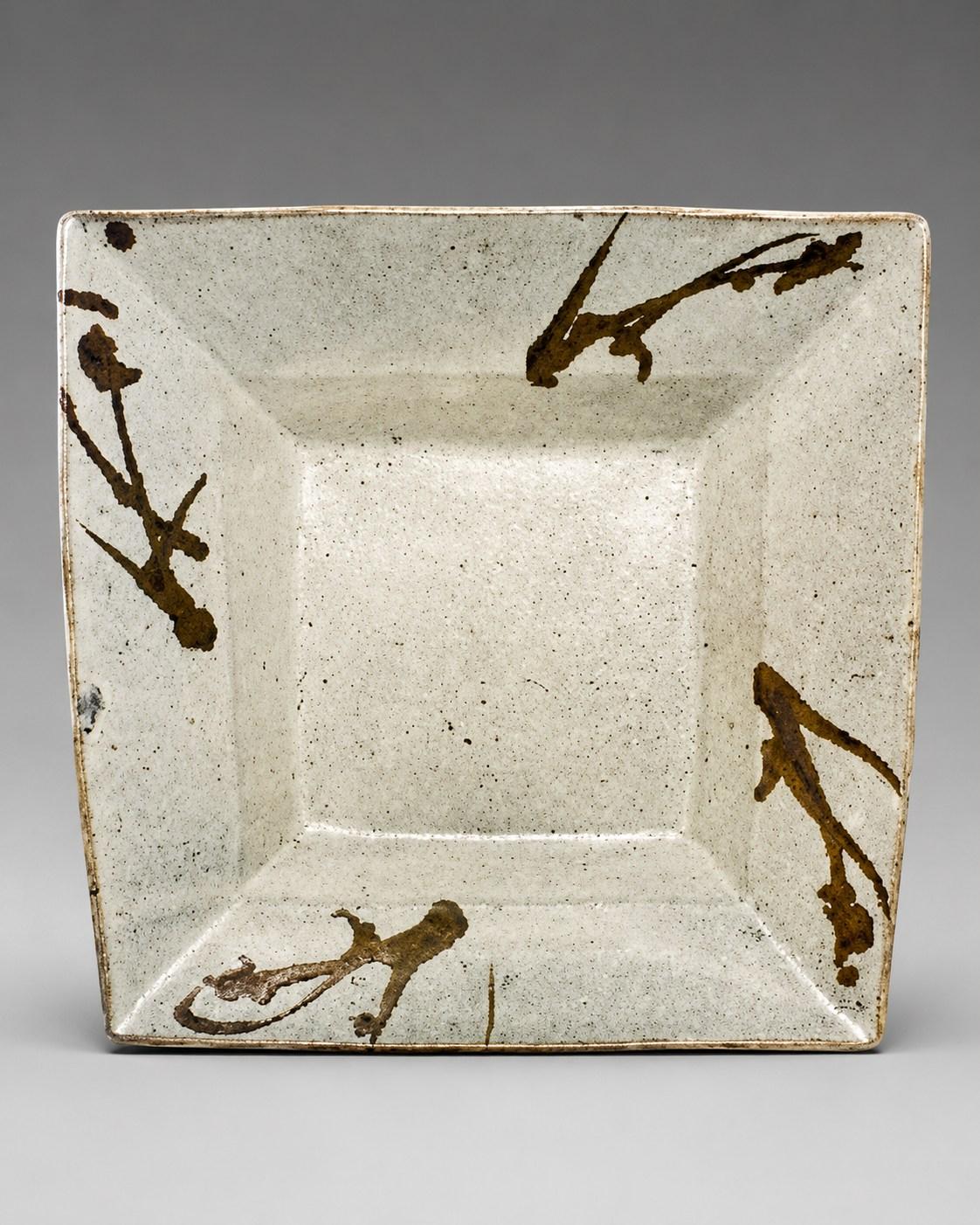
A Large Stoneware Square Dish with Grasses Design
Hamada Shoji
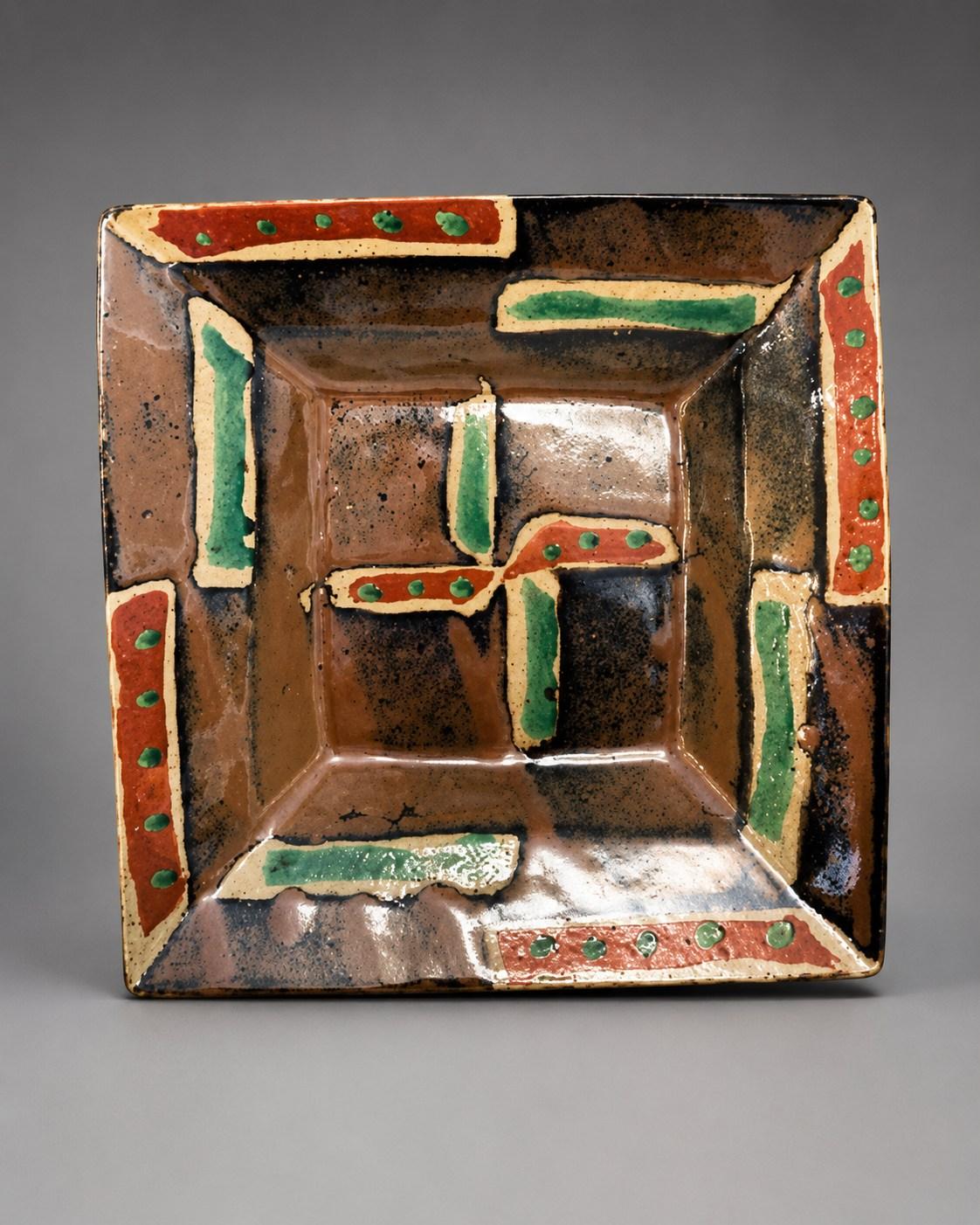
A Large Stoneware Square Dish with Iron Rust Glaze over Wax Resist
Hamada Shoji
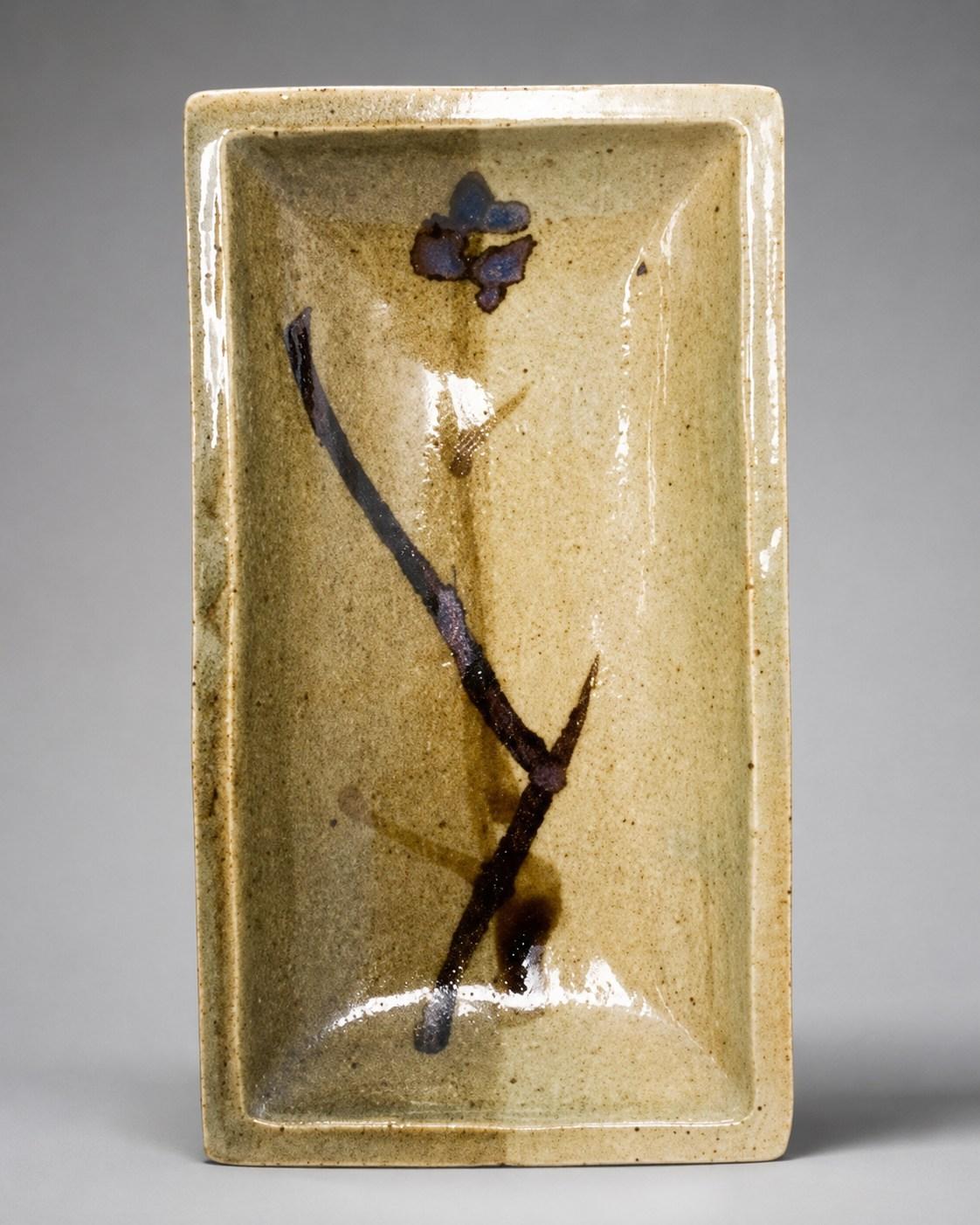
A Stoneware Rectangular Dish with Sugar Cane Motif
Hamada Shoji
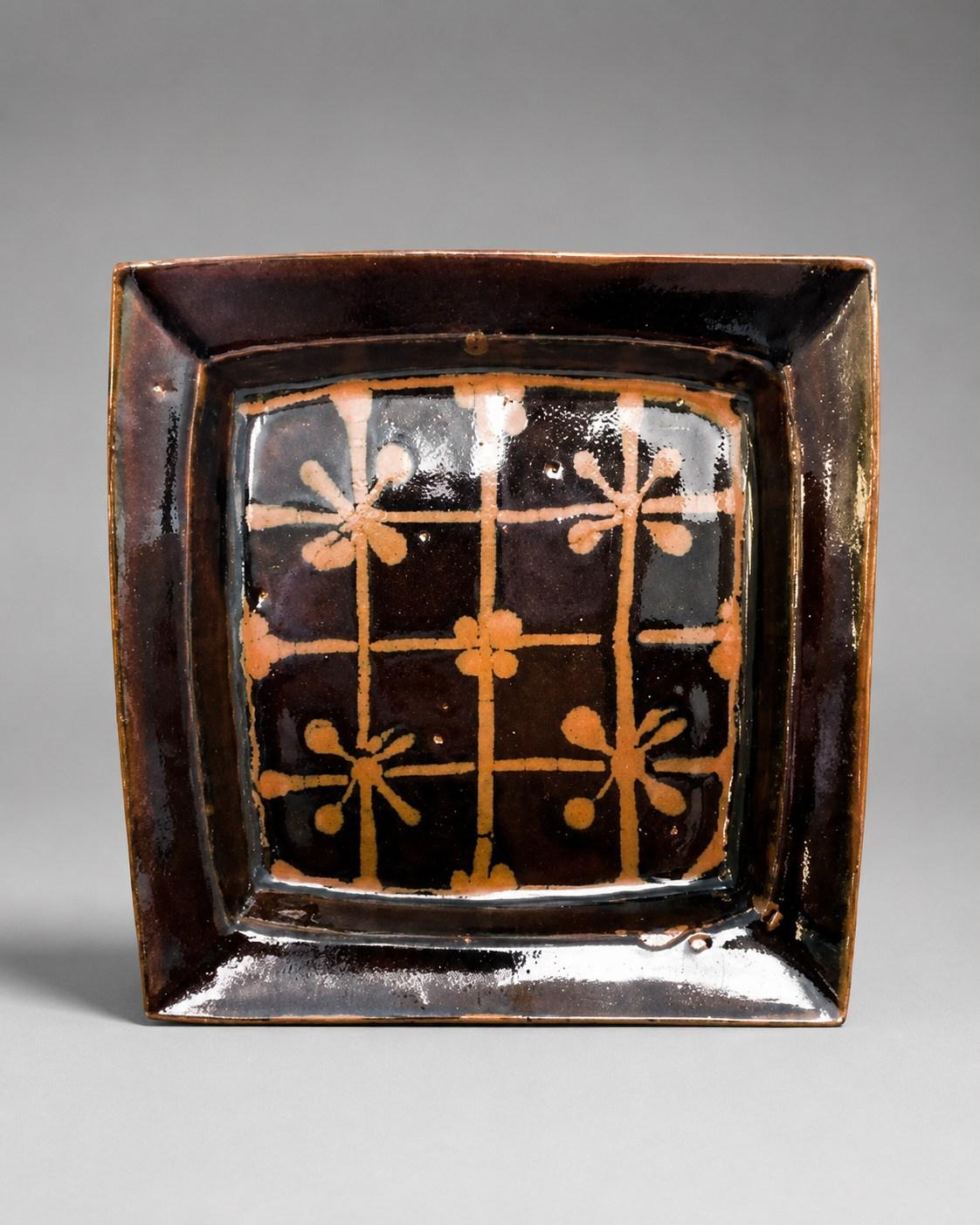
A Stoneware Square Dish with Abstract Checkered Floral Design
Hamada Shoji
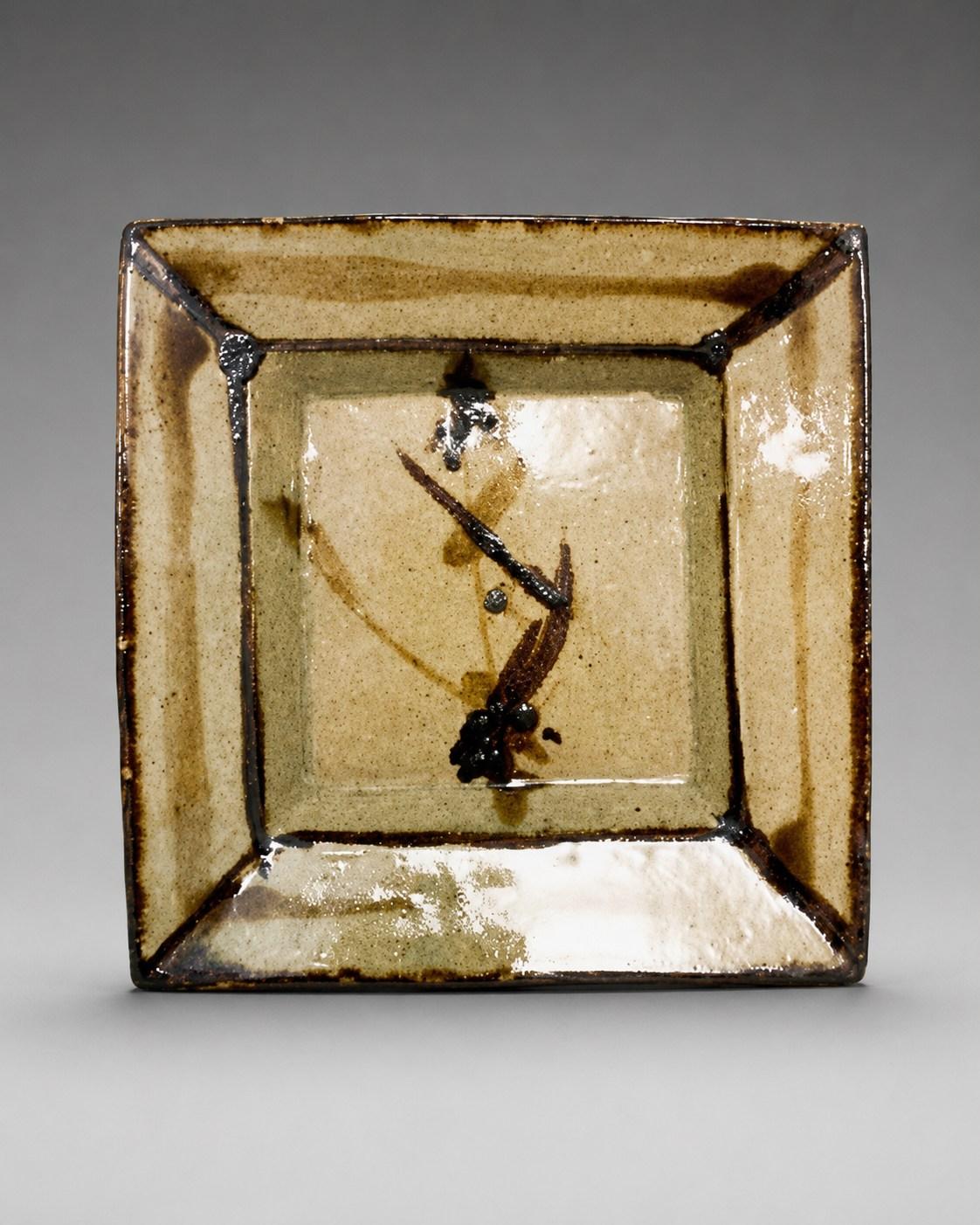
A Stoneware Square Dish with Sugar Cane Motif
Hamada Shoji
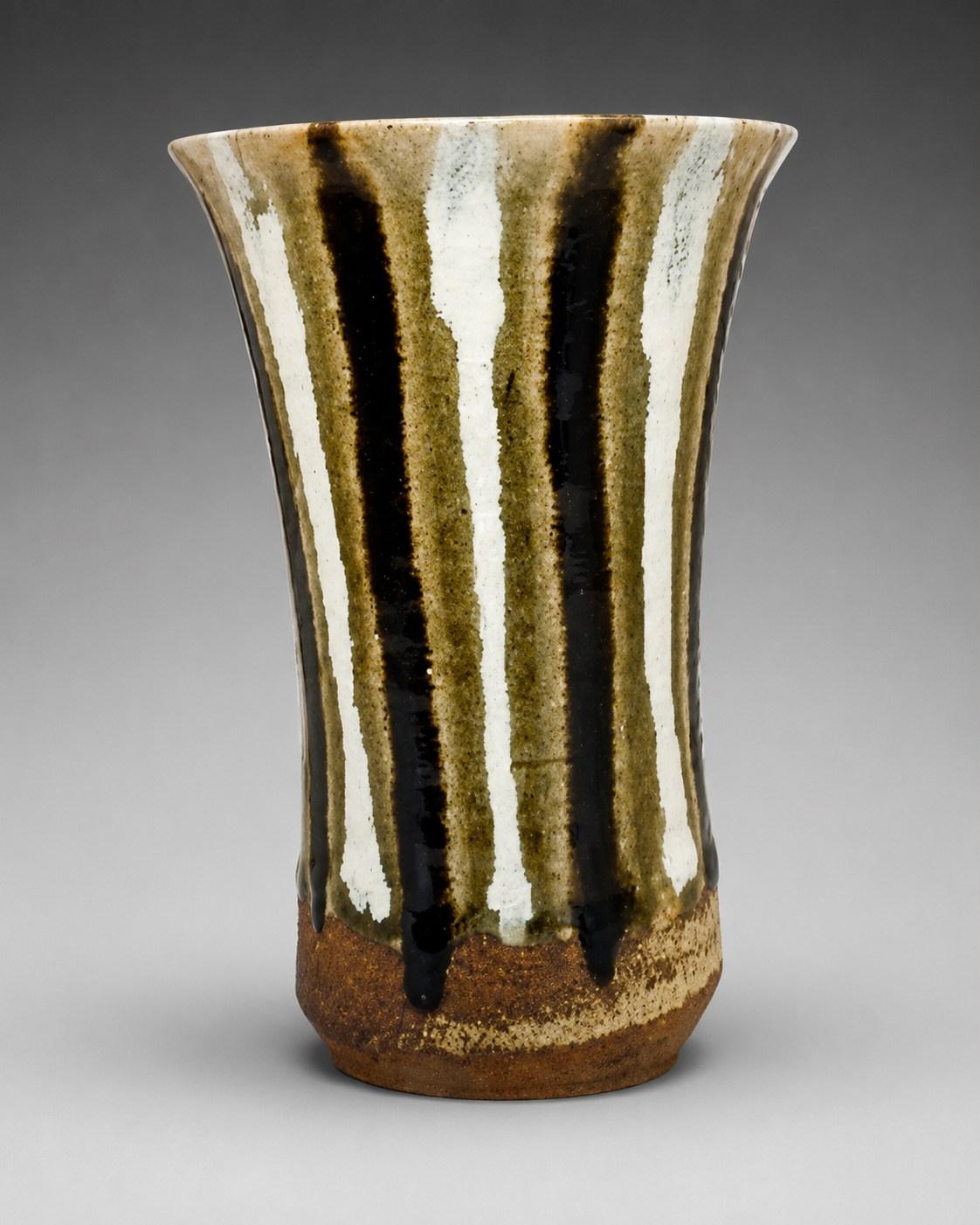
A Stoneware Vase with Poured Glaze Pattern
Hamada Shoji